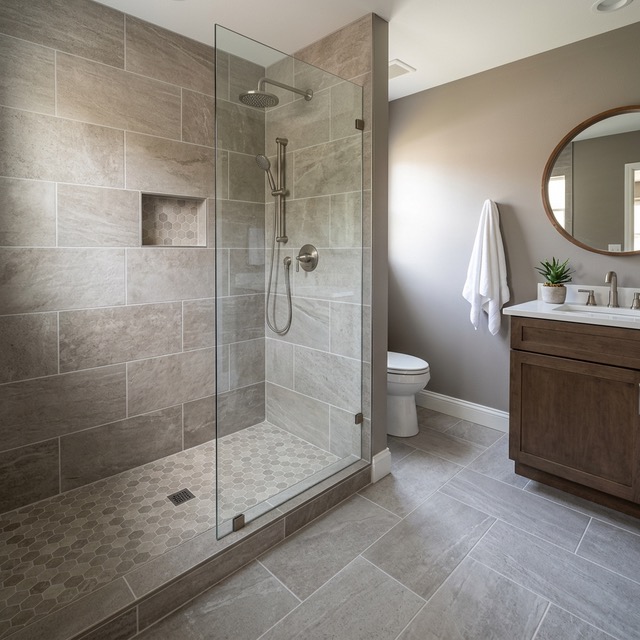
Quick Answer:Bathroom tile should be selected based on water resistance, slip resistance, maintenance, durability, layout, grout lines, and the style of the bathroom. Porcelain, ceramic, stone, mosaic, and large-format tile each work best in different areas depending on the project.
Why Tile Selection Matters
Tile is the single most visible material in most bathroom remodels. It covers floors, walls, shower surrounds, and accents — and it's the element that defines the entire look and feel of the space.
Choosing the right tile isn't just about aesthetics. The material, size, finish, and installation method all affect durability, maintenance, slip resistance, and long-term satisfaction. Here's what Tulsa homeowners need to know.
Porcelain vs. Ceramic
Porcelain and ceramic tiles are both made from clay fired in a kiln, but porcelain is fired at higher temperatures, making it denser, harder, and more water-resistant.
For bathrooms — especially showers and floors — porcelain is generally the better choice. It absorbs less water (under 0.5% absorption rate), resists staining, and holds up well in Tulsa's climate. Ceramic tile works fine for walls and low-moisture areas but isn't ideal for shower floors or high-traffic surfaces.
Cost-wise, quality porcelain is only slightly more expensive than ceramic and offers significantly better longevity.
Natural Stone
Marble, travertine, limestone, and slate each bring a unique, organic beauty that manufactured tiles can't fully replicate. Natural stone creates a high-end, timeless feel — particularly for shower accent walls, niches, vanity backsplashes, and natural stone countertops.
The trade-off is maintenance. Natural stone requires periodic sealing (typically annually) and is more susceptible to staining, etching, and water absorption than porcelain. It's a great choice for accents and feature areas, but for full shower surrounds in wet Oklahoma climates, porcelain often makes more practical sense.
Floor Tile vs. Wall Tile
Not all tiles are rated for floor use. Floor tiles need to be thick enough to handle weight and traffic, and they must have an appropriate slip rating — especially in wet areas like bathroom floors and shower pans.
Wall tiles can be thinner, lighter, and have a polished finish since slip resistance isn't a concern. This gives you more design freedom for shower walls and backsplashes.
Always check the tile's PEI rating (Porcelain Enamel Institute) or coefficient of friction (COF) before using it on a floor. Your installer should be able to guide you through this.
Slip Resistance
Slip resistance is a critical safety factor in bathroom tile selection — especially for shower floors and bathroom floors that get wet daily.
Look for tiles with a textured matte finish or a DCOF (Dynamic Coefficient of Friction) rating of 0.42 or higher for wet areas. Smaller tiles — like 2" hexagons or penny rounds — are ideal for shower floors because the additional grout lines create natural grip.
Avoid using large, polished tiles on shower floors. They look beautiful on walls but can be dangerously slippery underfoot when wet.
Grout Considerations
Grout choice affects both the look and the maintenance of your tile installation. Epoxy grout is more stain-resistant and waterproof than traditional cement-based grout, making it an excellent choice for showers and floors.
Grout width also matters. Thinner grout lines (1/16" to 1/8") create a more seamless, modern look. Wider lines (3/16" to 1/4") are more traditional and easier to work with for natural stone.
In Tulsa's hard water, lighter grout tends to show mineral staining more quickly. Consider medium or darker shades for high-use areas to reduce visible wear.
Style and Pattern Options
Beyond material, the pattern and layout you choose dramatically affect the bathroom's character:
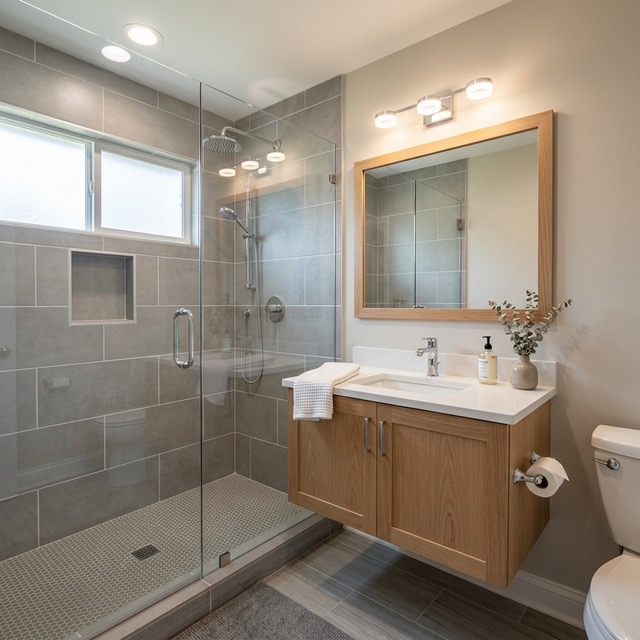
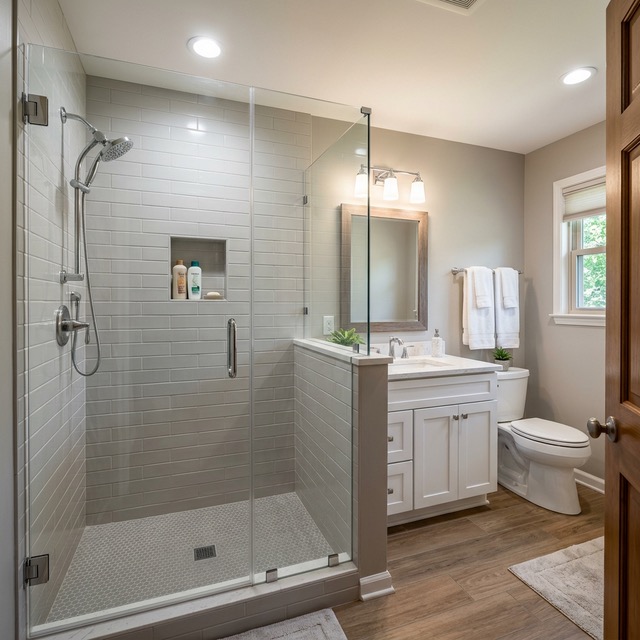
• **Subway tile** remains a classic — affordable, clean, and versatile. Consider a vertical stack or herringbone layout for a modern twist. • **Large-format tiles** (12×24 or larger) create a sleek, minimal look with fewer grout lines — ideal for contemporary bathrooms and modern walk-in shower designs. • **Mosaic tiles** add texture and visual interest, particularly in niches, accent bands, or shower floors. • **Wood-look porcelain** gives the warmth of hardwood without the moisture concerns — popular for bathroom floors in Tulsa homes.
Mixing materials — such as a large-format porcelain wall with a marble mosaic niche — is one of the most effective ways to create a premium, layered look without a premium price tag.
Working with a Professional
Tile selection feels overwhelming because there are hundreds of options. A good remodeling contractor will narrow the choices based on your budget, design goals, and practical needs — then provide a layout plan before any tile goes up.
At Tulsa Remodel Guys, we provide premium tile installation in Tulsa. We walk clients through material options, show samples, and create a clear design direction before the project starts. The result is a bathroom that looks exactly like you envisioned — without the stress of second-guessing decisions mid-project.
Frequently Asked Questions
What's the best tile for bathroom floors?
Porcelain tile is the top choice for bathroom floors in Tulsa homes. It's dense, water-resistant, durable, and available in a wide range of styles — including realistic wood and stone looks. For shower floors, small mosaic tiles (like penny rounds or hexagons) provide better traction and drainage.
Is natural stone tile worth the extra cost?
Natural stone like marble, travertine, or slate adds genuine character that no manufactured tile can fully replicate. It does require sealing and more careful maintenance, but for accent walls, niches, or shower features, it creates a premium, one-of-a-kind look.
How do I choose the right grout color?
For a seamless, modern look, match the grout closely to the tile color. For a bolder, graphic look, use contrasting grout. Darker grout is more forgiving with staining over time, while lighter grout creates a cleaner visual but requires more upkeep.
Can I use large-format tile in a small bathroom?
Yes — and it's often a great choice. Fewer grout lines make a small bathroom feel larger and cleaner. Just make sure the tile layout is planned to avoid thin, awkward cuts at the edges.
Ready to Get Started?
Schedule a free consultation with Tulsa Remodel Guys. We'll assess your space, discuss your priorities, and provide a transparent estimate.